Why We Invested in Micruity.
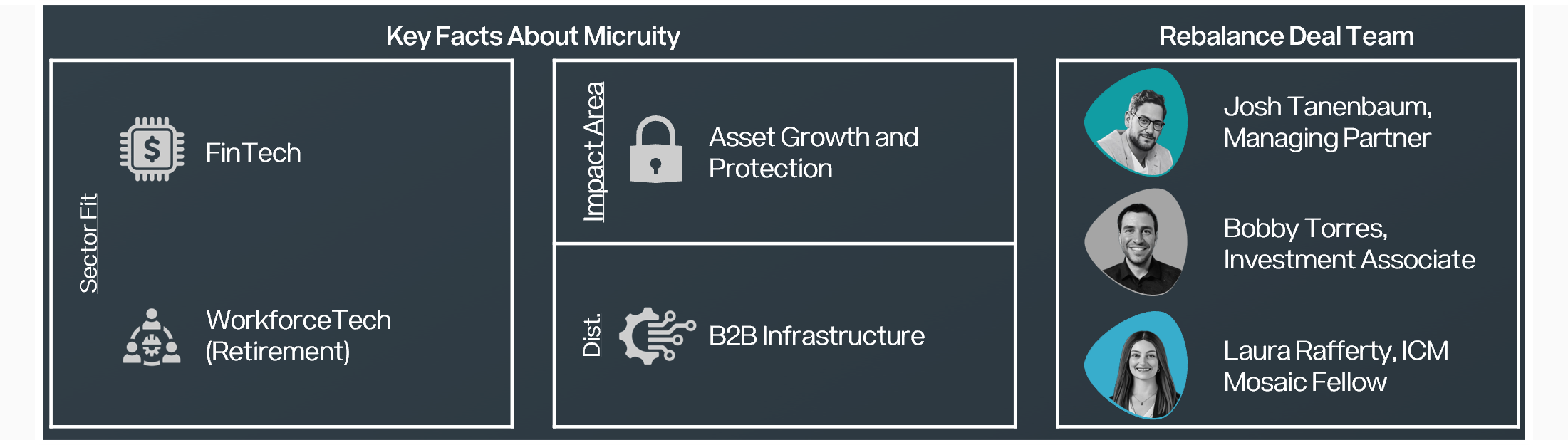
Turning Retirement Savings into Lifelong Financial Security
For most Americans, the road to retirement is paved with uncertainty. Over the last 40 years, the burden of securing lifelong income has shifted from institutions to individuals. Yet most workers lack access to tools that turn their savings into sustainable retirement income. The result? Even those who diligently contribute to their 401(k)s risk running out of money in their later years.
It’s not just a personal challenge, it’s a system-wide failure. We invested in Micruity because it is building the foundational infrastructure to fix it.
How Financial Security was Taken Away From Retirees
Once, defined benefit (DB) pensions promised savers a predictable retirement income for life. But today only 8% of Gen Z workers have access to a DB plan, compared to 51% of the Silent Generation. In their place, employers now provide 401(k) and other defined contribution (DC) plans. These provide benefits like an employee match. However, they do not provide a guaranteed income. As a result, if the value of their savings is hit by a recession or they withdraw a little too fast, a retiree can face financial ruin. That design gap now affects over 80 million Americans in or nearing retirement.
Retirees in DC plans can access guaranteed income by purchasing an annuity. But only 7% do so, because annuities have been difficult to deliver, challenging to integrate, and nearly impossible to scale. One driver is that over $845 billion of assets leak from 401(k)s into IRAs each year, where they are harder to manage.
The Solution: Infrastructure That “Pensionizes” 401(k)s
Micruity is building the modern infrastructure to fix this: an open-architecture, API-first platform that routes participant data across the retirement ecosystem. Think Plaid for Retirement: a single data layer that connects recordkeepers, asset managers, insurers, and plan sponsors to enable retirement income products directly inside 401(k)s.
What’s distinctive about Micruity’s platform is its scalability and flexibility:
A single integration replaces dozens of bespoke connections
Open architecture supports any carrier, and any product
Modular product bundles —for accumulation, transition, and decumulation — serve savers across the full retirement lifecycle
Enterprise-grade scale powers over $40 billion in plan assets already using Micruity-backed solutions
This isn’t hypothetical. Micruity now integrates with 4 of the top 5 U.S. recordkeepers, covers 50% of the Target Date Fund market, and serves institutions including Fidelity, State Street Investment Management, and MetLife. Micruity has doubled revenue year-over-year and seen 17x growth in usage and 3.5x growth in plans with Micruity-powered retirement income. It is becoming the category-defining infrastructure layer for retirement income.
Why Now: A System Under Pressure
The passage of SECURE 1.0 and 2.0 removed legal and fiduciary barriers that had long blocked in-plan annuity adoption. At the same time, the U.S. is facing a retirement crisis: 81 million Americans will be over age 65 by 2040, and the Social Security trust fund is projected to reduce benefits starting in 2033. For the low- and middle-income workers who rely on Social Security for 35–40% of their retirement income, that’s a looming shock. Meanwhile, employers are under pressure to offer financial wellness benefits that improve long-term outcomes. In-plan annuities offer a way to reduce retirement insecurity, improve participant outcomes, and differentiate 401(k) offerings—all without requiring a new product, just better infrastructure.
Why This Team: Mission-Driven Operators with Institutional Chops
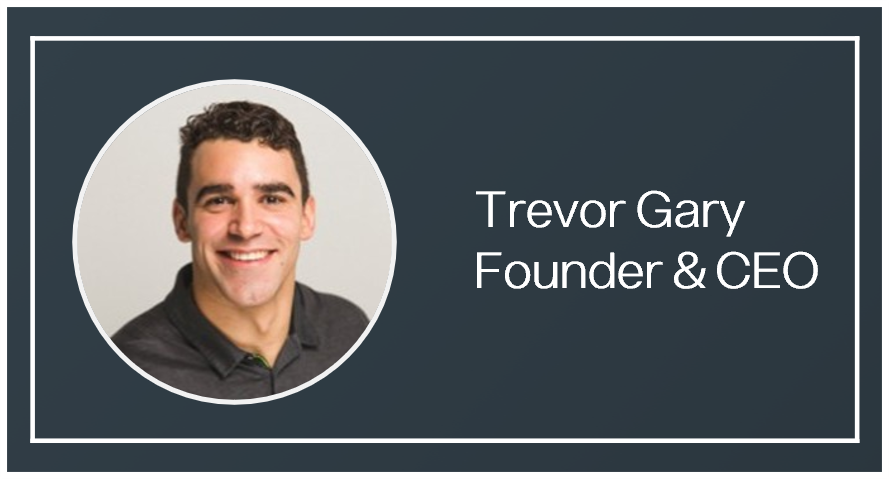
CEO Trevor Gary started Micruity after a career in pension actuarial services and policy. His original idea—a direct-to-consumer app for micro-annuities—morphed into infrastructure once he realized that systemic change needs systemic rails. That clarity of purpose, paired with deep technical vision and execution, has attracted a standout team.
Industry veteran executives include Elizabeth Heffernan (Partnerships), Kim Rosenberg (Revenue), and Mike Westhoven (Client Strategy) who bring decades of experience from Fidelity, Legal & General and Athene, and TIAA respectively.
At the board level, Trevor has attracted serial financial services entrepreneur Rob Foregger (co-founder of NextCapital and Personal Capital) and retirement legend Anne Ackerley (former Head of Retirement for BlackRock).
Together, they’ve closed the biggest names in retirement, won head-to-head against entrenched incumbents, and built a product that serves the market at enterprise scale.
Why Rebalance: Reimagining Retirement for Long-Term Security
Rebalance invested in Micruity because the company is solving one of the most consequential challenges in U.S. financial security. Micruity’s platform enables recordkeepers, asset managers, insurers, and employers to build and distribute retirement income products with far less friction, unlocking solutions that improve the long-term economic outcome for millions of workers.
Our distribution network directly overlaps with Micruity’s go-to-market footprint across enterprise employers, retirement recordkeepers, and leading asset managers. This alignment positions Rebalance to add value far beyond capital. Already, we’ve introduced Micruity to key strategic partners across the retirement ecosystem, helping expand its reach into channels where demand for income solutions is accelerating.
We believe the retirement landscape is in the early innings of transformation and consolidation as regulation, demographic pressure, and employer demand for more holistic benefits converge. The winners will be the companies that provide the connective tissue across the ecosystem. Micruity is architected to be that infrastructure layer. Our team is supporting the company by bringing relationships, strategic guidance, and corporate finance expertise to help accelerate this trajectory.
Looking Ahead
Micruity has the potential to rebuild what’s been lost in America’s retirement system: predictability, peace of mind, and financial security in later life. By enabling this transformation, we estimate that by 2032 Micruity could serve a $1 billion annual revenue opportunity across annuity and Target Date Fund infrastructure alone. This is just the beginning. We’re excited to partner with Trevor and the Micruity team as they help transform defined contribution plans into engines of long-term financial well-being.
Back to PerspectivesSign up for our newsletter or follow us on social media